Regular deep work – or better yet, achieving flow – is one of the hardest things to maintain in hybrid teams. What are key barriers and what can we do?
At FlowLabs, we’ve seen firsthand how even small design changes to workflows can foster team focus.
🔎 Paper in Focus: Barriers to Flow at Work
A study of 696 software professionals identified three main categories of obstacles that keep people from entering a state of flow:
- Personal factors: tasks that are too easy (routine) or too hard (overwhelming), stress from work or home, and a lack of intrinsic motivation.
- Situational factors: frequent interruptions, unrealistic deadlines, or sudden requirement changes.
- Organizational factors: besides the obvious ones, infrastructure issues!
The study highlights that many flow inhibitors are not just individual but rooted in the work environment and organizational practices, emphasizing that interventions must address structural factors (task design, schedule, tooling) not just individual mindset.
📖 Good Reads
- Read How to Structure Your Day Like a High Performer if you want to learn how to structure your workday in a way you won’t require more hours, by reducing distractions and optimizing for energy flow.
- Hilarious article on Business Insider on how the CIA manual from 1944 described 16 ways to sabotage organizational productivity. Optimize the sabotaging by having many interruptions and meetings with as much people as possible.
🕰 Focused work 100 years ago?
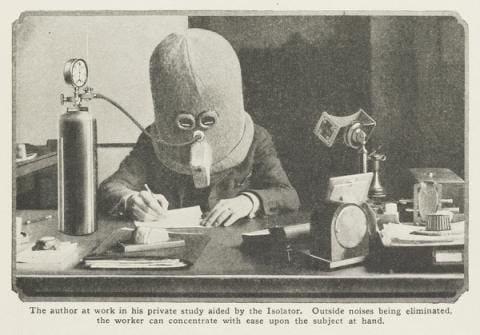
In 1925, inventor Hugo Gernsback designed The Isolator: a helmet that blocked all external stimuli, even light and sound, to help people concentrate. It was airtight and required an oxygen tank.
While it looks absurd today, the idea captures how long we’ve been obsessed with focus and deep work; long before noise-cancelling headphones or focus apps existed.
🎧 Learn more about the Isolator and modern focus tools in this recent podcast.
🚀 FlowLabs Update
We recently presented three papers at CSCW’25, the top conference on computer-supported cooperative work. Hybrid work and AI were major themes this year, especially around how to help knowledge workers achieve sustainable focus.
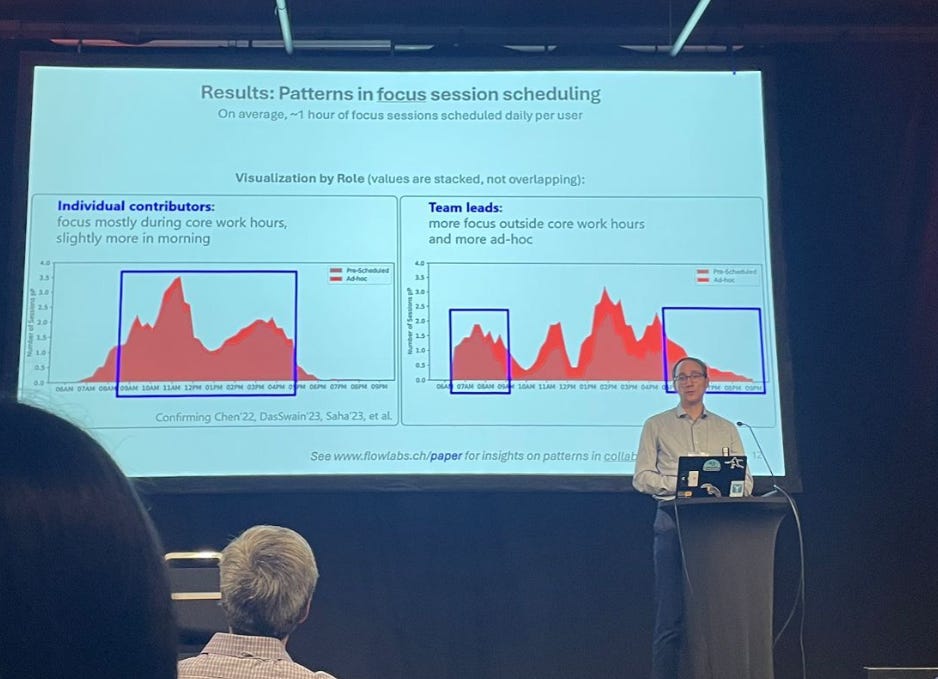
In my talk (slides here), I presented FlowTeams, our approach to sharing presence awareness in hybrid teams. It helps teams with semi-automatically finding the best moments for collaboration and deep work, by balancing both.
One take-away, while individual contributors focus mostly during core work hours, team leads tend to focus more outside those hours, as they want to remain available for their team in case of unplanned questions or blockers.


Comments are closed.